
CS Unplugged activity
Marching Orders
Would it be good if people followed instructions exactly? If you pointed at a closed door and said “go through that door,” what would happen? Computers work by following lists of instructions, and they do exactly what the instructions say, even when the instructions don’t make sense.
Try it first
See if you can draw this picture from these instructions, before you read any further or look at the result below.
- Draw a dot in the centre of your page.
- Starting at the top left-hand corner of the page, rule a straight line through the dot, finishing at the bottom right hand corner.
- Starting at the bottom left-hand corner of the page, rule a line through the dot, finishing at the top right hand corner.
- Write your name in the triangle in the centre of the left-hand side of the page.
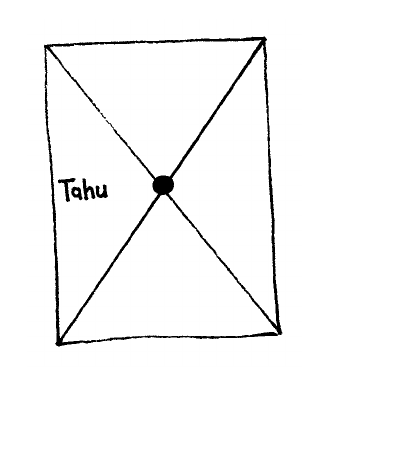
Close, or way off? Either way, you’ve just seen why programmers have to say exactly what they mean: the computer will do precisely what the instructions say, not what you meant.
Now play it with a partner
- Decide who goes first.
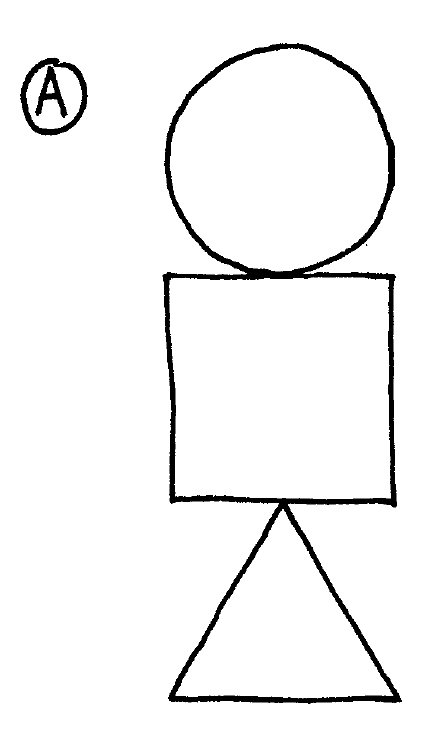
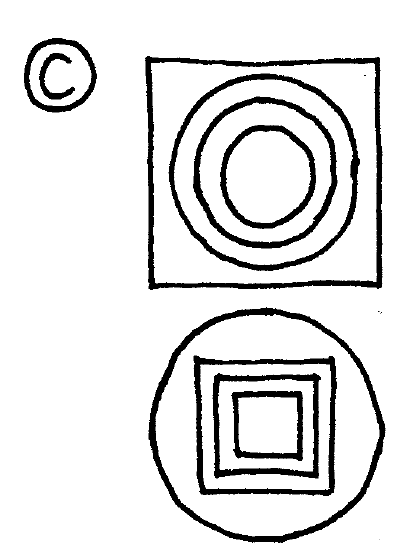
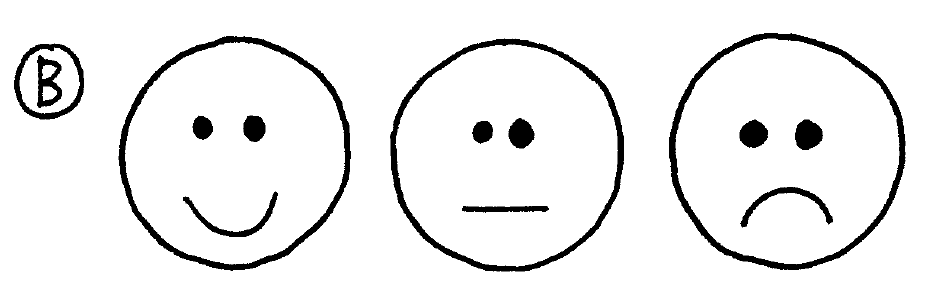
- The first player looks only at their own Picture 1 and describes it out loud, without showing it or pointing at it.
- The other player draws exactly what they hear, in their own blank box.
- Compare the drawing to the real picture, then switch jobs for Picture 2.
Player A’s sheet
Keep this sheet hidden from Player B.
Your pictures: describe these out loud
Draw here: what Player B describes
Round 2 drawing
Round 4 drawing
Player B’s sheet
Keep this sheet hidden from Player A.
Your pictures: describe these out loud
Draw here: what Player A describes
Round 1 drawing
Round 3 drawing
Check your work
There’s no single right answer here. When you’re both done, look at every drawing next to the real picture together. How close did you get? Talk about which words made the description easier or harder to follow.
What’s it all about?
Computers operate by following a list of instructions, called a program, that has been written to carry out a particular task. Programs are written in languages that have been specially designed, with a limited set of instructions, to tell computers what to do. Some languages are more suitable for some purposes than others.
Regardless of what language they use, programmers must become adept at specifying exactly what they want the computer to do. Unlike human beings, a computer will carry out instructions to the letter even if they are patently ridiculous, and a small error can cause a lot of problems. Errors are commonly called “bugs,” in honour (so it is said) of a moth that was once removed (“debugged”) from an electrical relay in an early 1940s electronic calculating machine.
Learn more: programming languages.
Answer key
There’s no single correct drawing for this activity. The point is comparing the drawing to the real picture and talking about why they matched or didn’t. A description tends to work better when it:
- Gives shapes an order (top to bottom, or outside to inside) instead of jumping around the page.
- Names sizes and positions (“a small circle centered on the square,” not just “a circle”).
- Says how many of something there are, every time it matters.
- Avoids words like “kind of” or “sort of” that leave room to guess.
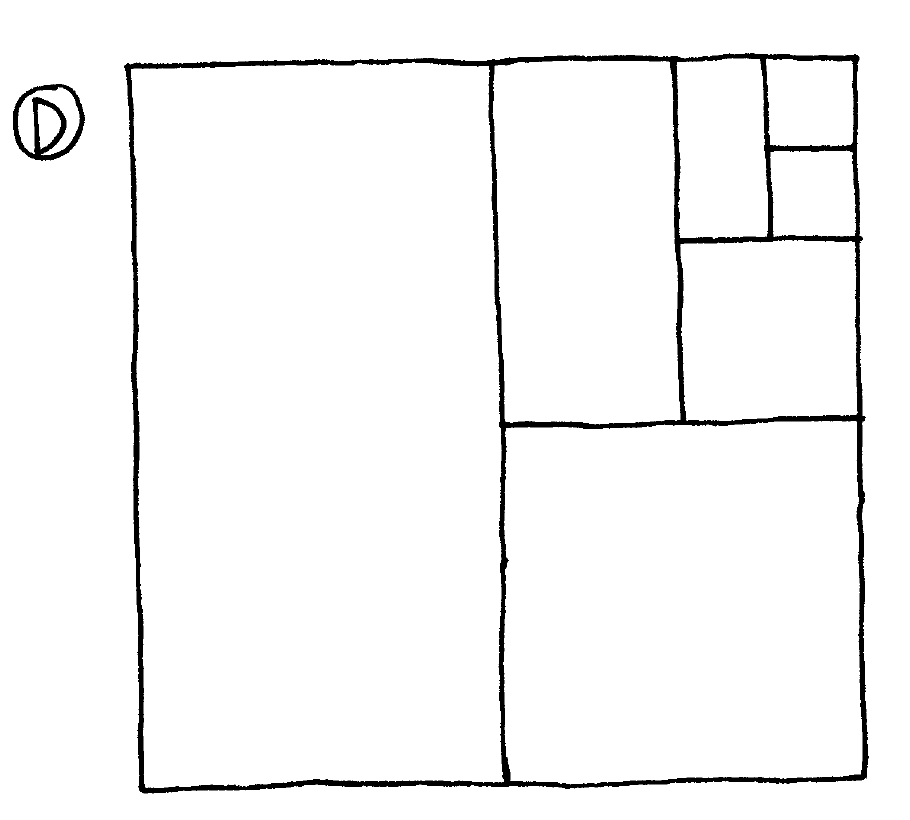
Picture D (the split square) and Picture F (the keypad) are the hardest to describe precisely: both have several same-shaped pieces that are only told apart by their size or position. If a pair breezes through Pictures A and B, that’s expected; the harder pictures are where the activity actually bites.
Version history
- Loading commit history…